The
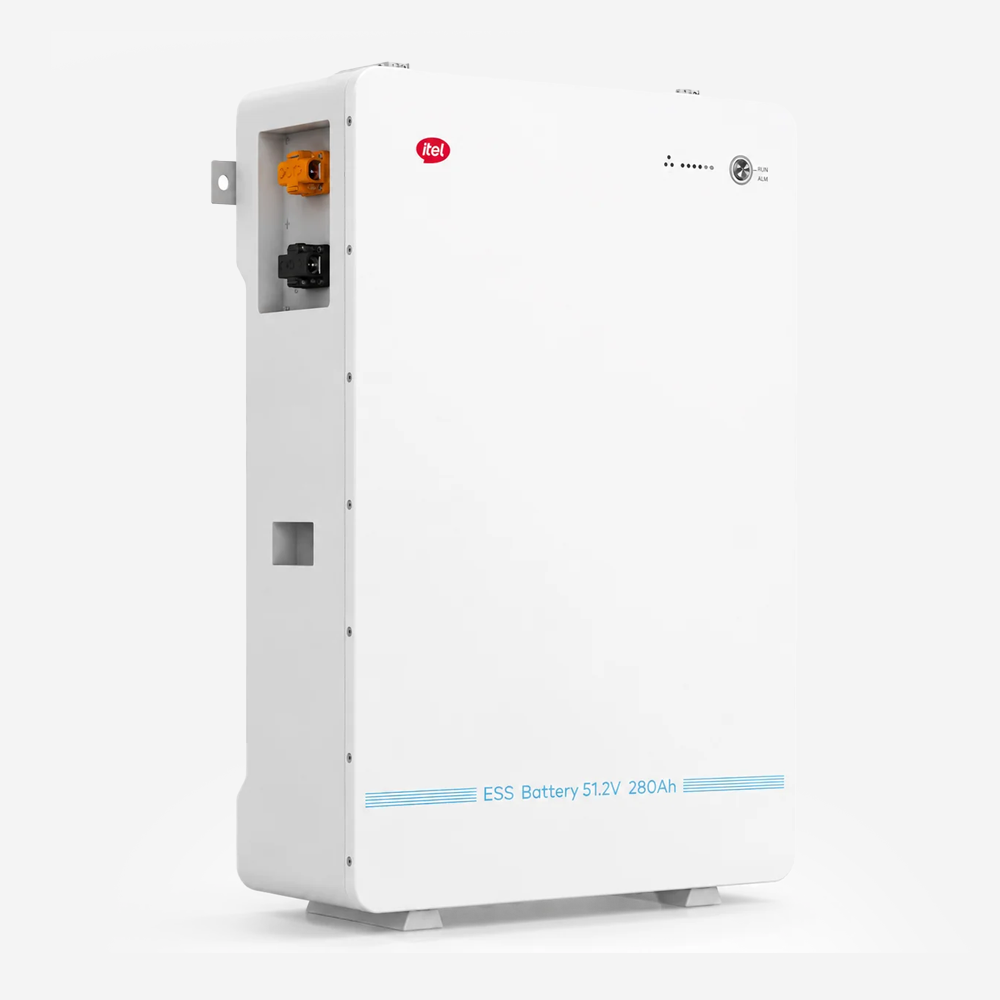
itel IPL-51280 is a high-capacity
LiFePO4 lithium battery built around a
51.2V, 280Ah electrical architecture. Its
14.33kWh nominal energy capacity provides substantial energy storage for solar backup and hybrid energy systems.
The battery is designed around
LiFePO4 chemistry, with an intelligent BMS for battery protection and
active balancing to help maintain cell balance during operation. Its 3A active balance capability is designed to support consistent battery performance over its operating life.
With
RS485, CAN and RS232 communication, the battery can communicate with compatible energy-storage equipment. It also supports up to
15 units in parallel, allowing storage capacity to be expanded when the overall system design supports parallel operation.
The
IPL-51280 has a metal enclosure, natural cooling and an
IP20 protection rating, so installation should be carried out in an appropriate protected environment.
Key Features
51.2V 280Ah Energy Storage
The battery provides
51.2V nominal voltage,
280Ah capacity and
14.33kWh nominal energy. This combination gives solar-system designers a substantial storage capacity for backup and energy-shifting applications.
When choosing an inverter and working out the charge and discharge needs, the capacity of 280Ah is especially important. The capacity of the battery must always be considered in conjunction with the inverter’s battery voltage, its current limits and the BMS communication requirements.
LiFePO4 Battery Chemistry
The
LiFePO4 chemistry provides a lithium-based storage platform suited to repeated solar-energy cycling. The battery uses a
Class-A LiFePO4 battery design and has a specified cycle life of more than
6,000 cycles at 25°C, 0.5C and 80% DOD.
The real service life is influenced by the operating temperature, the conditions under which it is charged and discharged, the depth of discharge, and the system’s configuration.
Active Cell Balancing
The
3A active balance current aids in keeping a better balance among the battery cells while the battery is in operation, and cell balancing is an important factor in ensuring consistent battery performance in a multi-cell energy-storage system.
Intelligent BMS
An
intelligent Battery Management System (BMS) provides battery-level monitoring and protection. The battery includes
50+ protection algorithms designed for safety and operating control.
Before installation, the BMS must be properly integrated with the inverter it is compatible with and the system configuration.
High Charge and Discharge Capability
The battery supports a
maximum continuous charge current of 150A and a
maximum continuous discharge current of 150A. Its specified
maximum pulse discharge current is 280A.
It is important to take these values into account when fitting the battery with an inverter; the inverter’s requirement for battery current must stay within the battery’s relevant continuous and peak limits.
Expandable Storage
Up to
15 units can be connected in parallel, subject to compatible system design and communication requirements. This allows larger energy-storage systems to be configured where additional battery capacity is required.
Best For
The
itel IPL-51280 is suitable for:
- Residential solar backup systems
- Hybrid solar energy-storage systems
- High-capacity battery backup
- Commercial energy-storage applications
- The solar systems that call for a 51.2V battery configuration
- Installations where parallel battery expansion is required
- Buyers looking for a 280Ah LiFePO4 battery
- Systems requiring CAN or RS485 battery communication
Not Ideal For
This battery should not be selected without further compatibility checking when:
- The battery voltage arrangement needed by the inverter is different.
- The amount of current that the inverter draws from the battery is more than the battery’s permitted limits.
- The BMS communication protocol required by the inverter is not supported.
- The installation area does not meet the battery’s needs for temperature and protection.
- The system needs to be used in an outdoor-rated enclosure since the battery only has an IP20 protection rating.
To check battery compatibility you should use the inverter’s voltage requirements, its charge and discharge limits, the BMS communication protocol and the battery configuration that is supported. 

Reviews
There are no reviews yet.