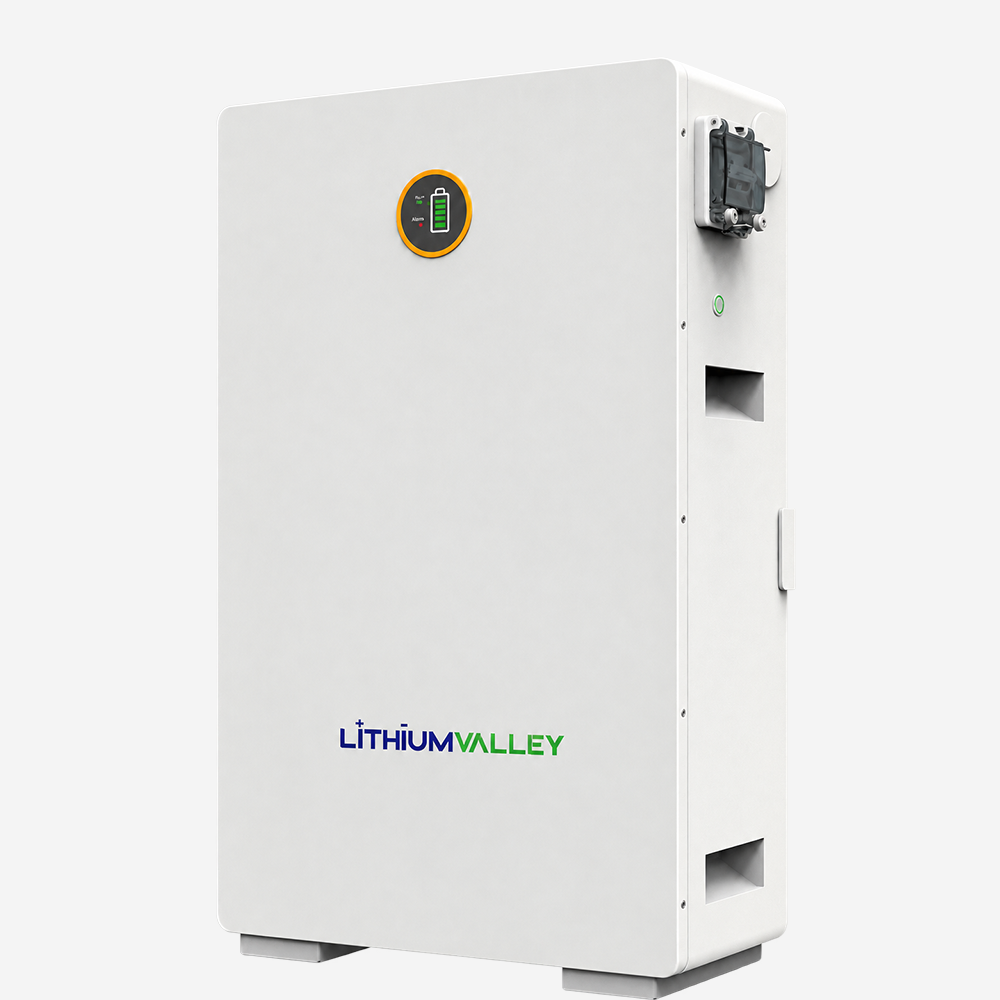
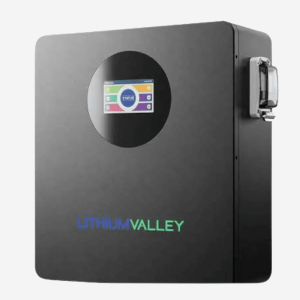
The Lithium Valley W15-5A is built around a
51.2V, 280Ah LFP battery pack with 14.336kWh nominal energy, giving residential solar users a substantial storage capacity in a single battery. It is designed for home energy storage, backup applications and systems where future battery expansion may be required.
The battery uses an intelligent Battery Management System to supervise battery operation and optimize performance. Built-in BLE adds convenient access to operating status, BMS configuration and firmware-update functions. CAN, RS485 and RS232 interfaces provide communication options for compatible inverter and energy-storage equipment.
People searching for a
lithium valley 14kwh battery should note that the exact nominal energy of the W15-5A is 14.336kWh. Likewise, buyers reading a
lithium valley 14kwh battery review should compare the actual voltage, current limits, communication protocol, cycle-life conditions and installation requirements rather than judging the battery by capacity alone.
Key Features
14.336kWh Energy in a Single Battery
With 14,336Wh of nominal energy and 280Ah capacity at 51.2V, the W15-5A provides substantial storage without requiring several smaller battery packs for the same nominal capacity.
This makes it useful where a home solar system needs longer backup capability or a larger amount of stored solar energy for evening and load-shedding use.
Lithium Iron Phosphate Chemistry
The W15-5A uses
A+ grade Lithium Iron Phosphate cells. LFP chemistry is paired with an intelligent BMS and a rated cycle life of 8,000 cycles under the defined 25°C and 0.5C charge/discharge test conditions.
For buyers comparing
lifepo4 energy-storage products, the cycle-life test conditions are important because the cycle figure should be considered together with temperature and charge/discharge rate.
Intelligent Battery Management
The integrated BMS monitors and manages battery operation in real time. Built-in BLE allows battery operating status to be checked and BMS settings to be configured from a compatible mobile device.
BLE also supports firmware-update functionality, helping the battery management platform remain serviceable without opening the battery enclosure for routine software-related updates.
High Charge and Discharge Capability
The battery has:
- Suggested charging/discharging current: 140A
- Standard charging/discharging current: 200A
- Instantaneous discharging current: 250A for 10 seconds
These current ratings are important when matching the battery with an inverter and calculating the expected battery-side current under heavy loads.
IP65 Protection
The W15-5A has an
IP65 protection rating. Its specified installation environment is indoors or under outdoor eaves, so the physical location should still follow the intended installation conditions rather than relying only on the IP rating.
Integrated Fire-Safety Feature
The battery includes a
single-pack-level hot aerosol fire-extinguishing device, adding another dedicated safety feature to the energy-storage enclosure.
Flexible Installation
The W15-5A supports both:
- Wall-mounted installation
- Floor installation
Optional detachable wheels are also available for applications where repositioning the battery is useful.
Best For
The Lithium Valley W15-5A is particularly suitable for:
- Residential solar systems requiring substantial battery storage
- Homes affected by regular load shedding
- Hybrid solar systems using a compatible 51.2V battery architecture
- Buyers wanting one large-capacity LFP battery instead of several small packs
- Systems that may require battery expansion later
- Users requiring CAN, RS485 or RS232 communication
- Installations needing wall-mounted or floor-standing flexibility
- Frequent-cycle solar energy-storage applications
It can also be considered by buyers comparing
lithium solar batteries for homes where battery communication, expansion capability and high charge/discharge current are important.
Not Ideal For
The W15-5A should not be selected solely because its voltage appears close to another battery system.
It may not be suitable where:
- The inverter requires a different battery-voltage architecture
- The inverter and battery cannot establish supported BMS communication
- Required continuous or surge battery current exceeds the permitted battery limits
- The planned location does not meet the battery’s environmental requirements
- A much smaller storage capacity is sufficient and 14.336kWh would be unnecessarily large
- System design requires an officially verified inverter/battery combination that has not yet been confirmed
Final inverter matching should cover voltage range, current limits, communication protocol, firmware and the required communication cable or pinout.


Reviews
There are no reviews yet.